Soft Wash vs. Pressure Wash: Which Does Your St. Augustine Home Actually Need?
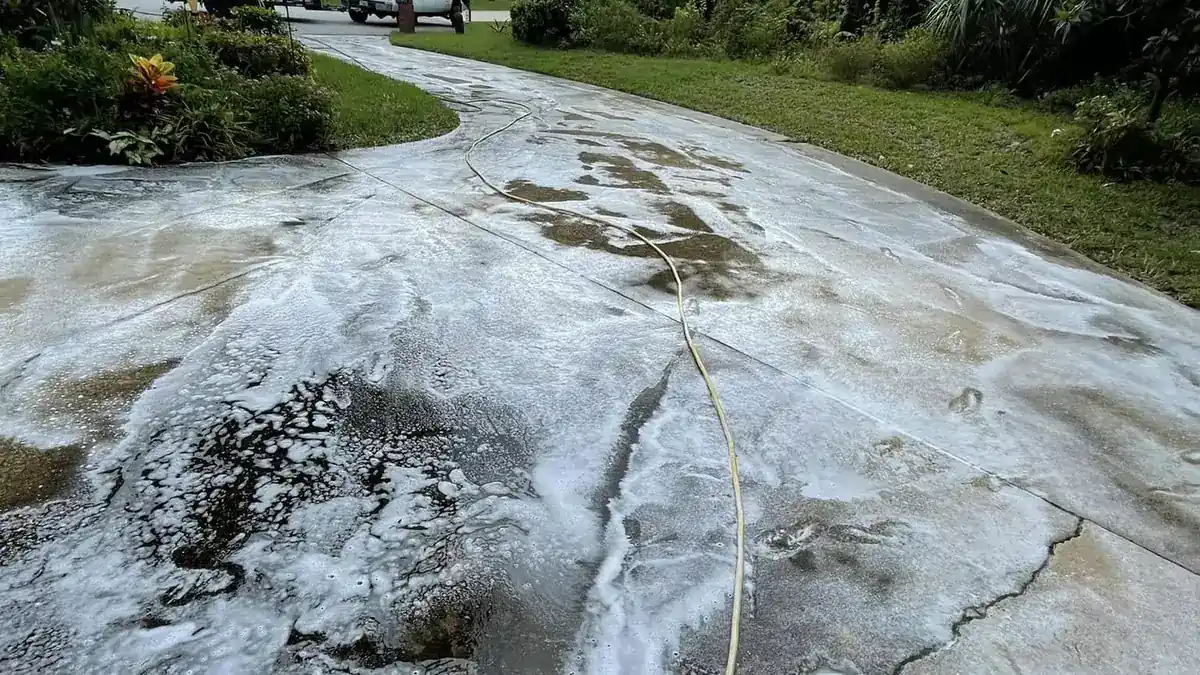
Soft washing or pressure washing: if you have looked into exterior cleaning for your St. Augustine home, you have seen both terms and wondered whether they are different methods or two names for the same thing.
Soft washing and pressure washing are different methods with different equipment, different chemistry, and different appropriate applications. Using the wrong one on the wrong surface is one of the most common ways exterior cleaning jobs cause damage.
What Pressure Washing Actually Means
Pressure washing uses high-pressure water to physically remove contamination from a surface. The force of the water is the primary cleaning mechanism. Pressure is measured in pounds per square inch (PSI), and professional equipment typically operates between 1,500 and 4,000 PSI depending on the surface being cleaned. The pressure physically blasts debris, algae, and buildup off the surface.
Pressure washing is the right tool for hard, durable surfaces: concrete driveways, concrete sidewalks, brick pavers in good condition, and exposed aggregate. These surfaces can tolerate high force without surface damage, and the mechanical action of the water removes embedded staining that chemistry alone cannot address.
What Soft Washing Actually Means
Soft washing uses water pressure of roughly 100 PSI or below, similar to a garden hose, combined with cleaning solutions that do the actual work. The chemistry kills biological growth (algae, mildew, mold, lichen, bacteria) at the cellular level rather than blasting the visible surface layer off. The low pressure then rinses the dead material away.
The result of soft washing lasts longer than pressure washing on biological growth because the organism is killed rather than dislodged. Pressure washing can remove visible algae from a roof shingle and leave the root system in the surface pores, where it regrows within weeks.
Soft washing kills the entire colony, which is why treated surfaces typically stay clean for one to three years rather than one to three months.
The Surfaces That Require Soft Washing in St. Augustine
Several exterior surfaces common in St. Augustine cannot tolerate pressure washing without damage:
Asphalt shingle roofing is the most important one. The granules embedded in asphalt shingles are the UV-protective layer that determines how long the shingle lasts. High-pressure water strips those granules.
The Asphalt Roofing Manufacturers Association (ARMA) explicitly recommends low-pressure chemical washing and warns against high-pressure methods. Most shingle warranties list pressure washing as a warranty-voiding activity. Roof soft washing is the only appropriate method.
Stucco exteriors are porous and almost always painted. High pressure forces water into the pores of the stucco, behind the paint film, and potentially into the wall cavity if any micro-cracks exist in the surface. Soft washing removes the biological growth without the hydraulic force that causes water intrusion.
EIFS and synthetic stucco are even more sensitive than traditional stucco. These systems have a fiberglass mesh layer embedded in the base coat, and high pressure can delaminate the finish coat from the base. Soft washing only.
Painted wood siding can have paint lifted or wood grain raised by excessive pressure. Even at moderate pressure, water can be forced behind lap siding boards in ways that create moisture problems inside the wall.
Screen enclosures and aluminum frames can be dented, bent, or have spline material dislodged by high pressure. Lanai and pool enclosure cleaning requires very low pressure and careful technique.
The Surfaces That Benefit from Pressure Washing
Concrete driveways, sidewalks, and parking surfaces handle pressure well. The dense surface tolerates high PSI, and the mechanical force is effective at removing embedded tire marks, oil staining, and the organic material that gets ground into concrete pores by foot and vehicle traffic.
Concrete pool decks (not coated) similarly handle pressure. The textured surface that provides anti-slip properties is mechanical, not chemical, and is not removed by appropriate pressure.
Brick pavers on driveways and patios can handle moderate pressure with proper nozzle technique. The main variable is the jointing sand: high pressure directed into the joints removes polymeric or regular sand, which needs to be accounted for.
Concrete block foundation walls and exposed concrete on building bases handle higher pressure than the finished surfaces above them.
Why Soft Wash vs. Pressure Wash Matters in St. Augustine
St. Augustine’s coastal climate means almost every exterior surface accumulates significant biological growth. The temptation to blast everything with a pressure washer is understandable. The immediate visual result looks good.
The problem is that using high pressure on surfaces that require soft washing creates two types of damage: direct surface damage (granule loss, paint lift, water intrusion) and premature regrowth because the organism was not chemically killed.
In a climate where algae regrows in weeks on an untreated surface, spending money on a method that does not address the root of the problem is not a good use of your cleaning budget.
How We Approach This
At Cannon Exterior Cleaning, we assess the surface before we set our pressure and select our chemistry. Roofs get soft washing, always. Stucco homes get soft washing.
Driveways and concrete get appropriate pressure. Fence material and type determines method. We do not apply one setting to an entire property because one setting is not right for all surfaces on a property.
Roofs are covered on the roof soft washing page, walls on the house washing page, and concrete on the driveway cleaning page. If you are not sure which method your property needs, contact us for a free estimate. We will walk through what we recommend and why for your specific surfaces.